Two-tone websites: how to build one site for people and AI

Sarah Halliday
Digital Account Manager at BFJ Digital
Keep ahead of the curve via our latest trends newsletter.
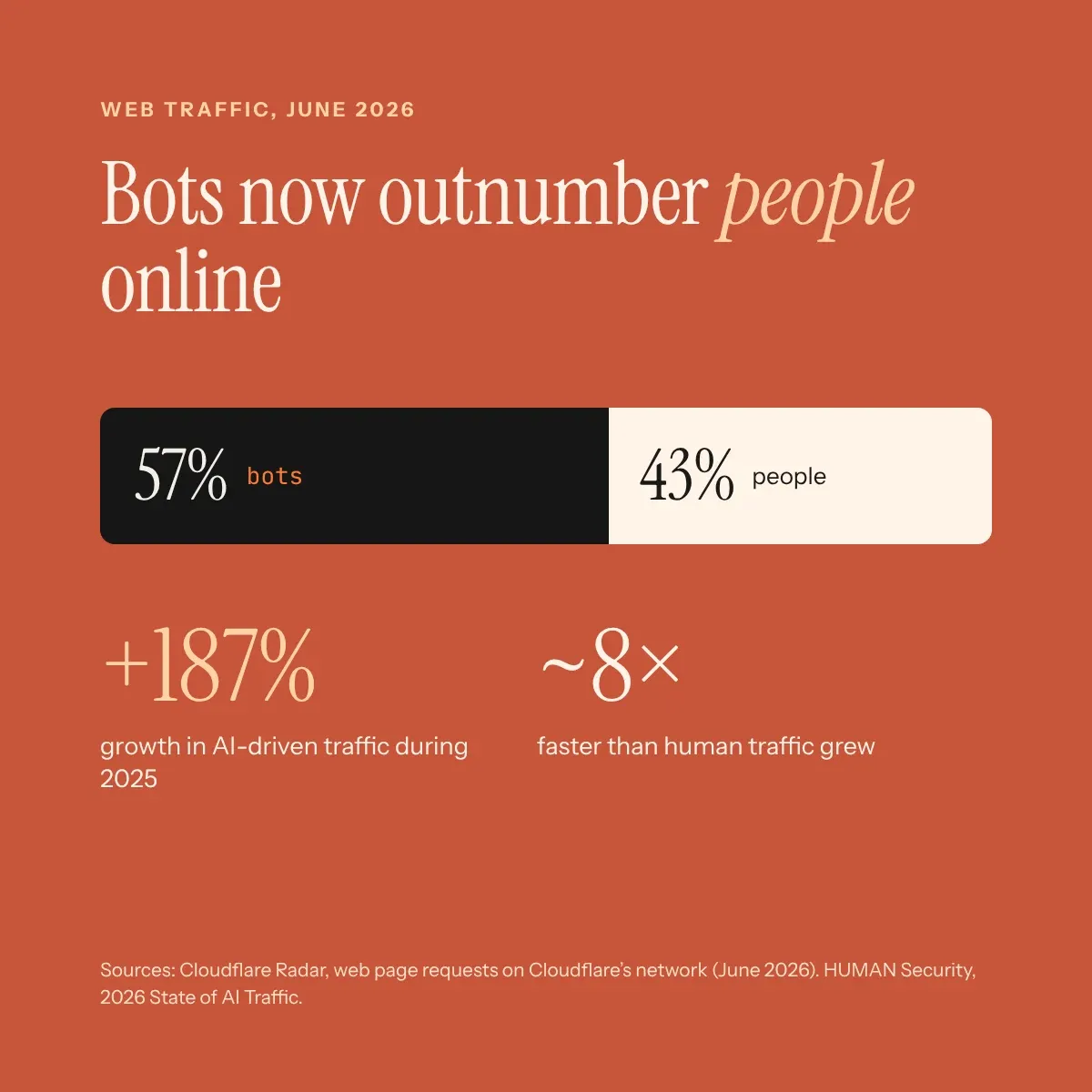
Contact us nowAt IAB Australia’s Brisbane Market Update, one stat stood out for our team: 57% of web traffic is no longer human.
The number traces back to Cloudflare, which reported in June 2026 that bots had overtaken people for the first time, at around 57% of web page requests on its network. Not all of those bots are AI. Many are search crawlers, scrapers and security threats. But AI traffic is the fastest-growing part: HUMAN Security found AI-driven traffic grew about 187% in 2025, roughly eight times faster than human traffic.
AI tools now read websites on people’s behalf. When a customer asks an AI tool to compare suppliers, it often reads your site before a person does. Most websites were designed for people only.
News Corp Australia’s answer is what it calls a two-tone website. This post explains what that is, why it matters for your business, and the changes that make a page readable to AI.
What is a two-tone website?
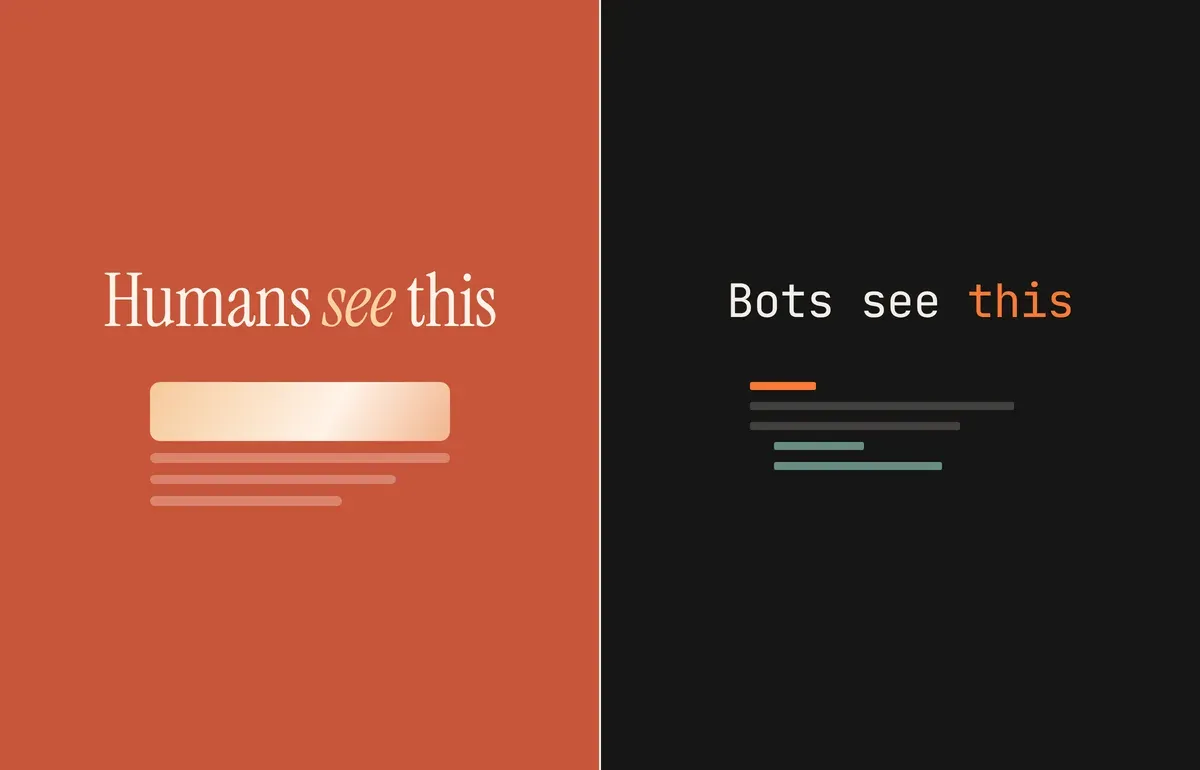
A two-tone website is one site built for two audiences. People get rich pages with images and storytelling. AI agents get the same content in a structure they can read quickly.
Corey Ahearne from News Corp Australia explained that News Corp is moving its sites this way, and The Economist already works like this. His summary: “Humans want experience. Bots are looking for extraction.”
Why does it matter if AI reads your website?
AI tools now research on your customers’ behalf. They compare suppliers, summarise services and suggest who to call. If an AI can’t pull a clear answer from your page, it moves on to a site where it can.
AI trusts consistency, not one-off mentions. Karin Du Chenne from Kantar made the second point: AI doesn’t trust a single sighting of your brand. It looks for the same story across every channel, and it leans heavily on reviews and publisher citations.
So the brands that win won’t necessarily be the loudest. They’ll be the ones telling the same true story in enough credible places, for long enough. As Corey put it, “consistency really beats virality.”
Do you need a separate website for AI?
No. A two-tone website isn’t a second site or a stripped-back version for bots. It’s the same content, structured so both audiences get what they need. The design and storytelling stay for people. The structure underneath does the work for AI.
Can AI tools reach your pages at all?
Check this first. The best-structured page does nothing if AI crawlers can’t get to it.
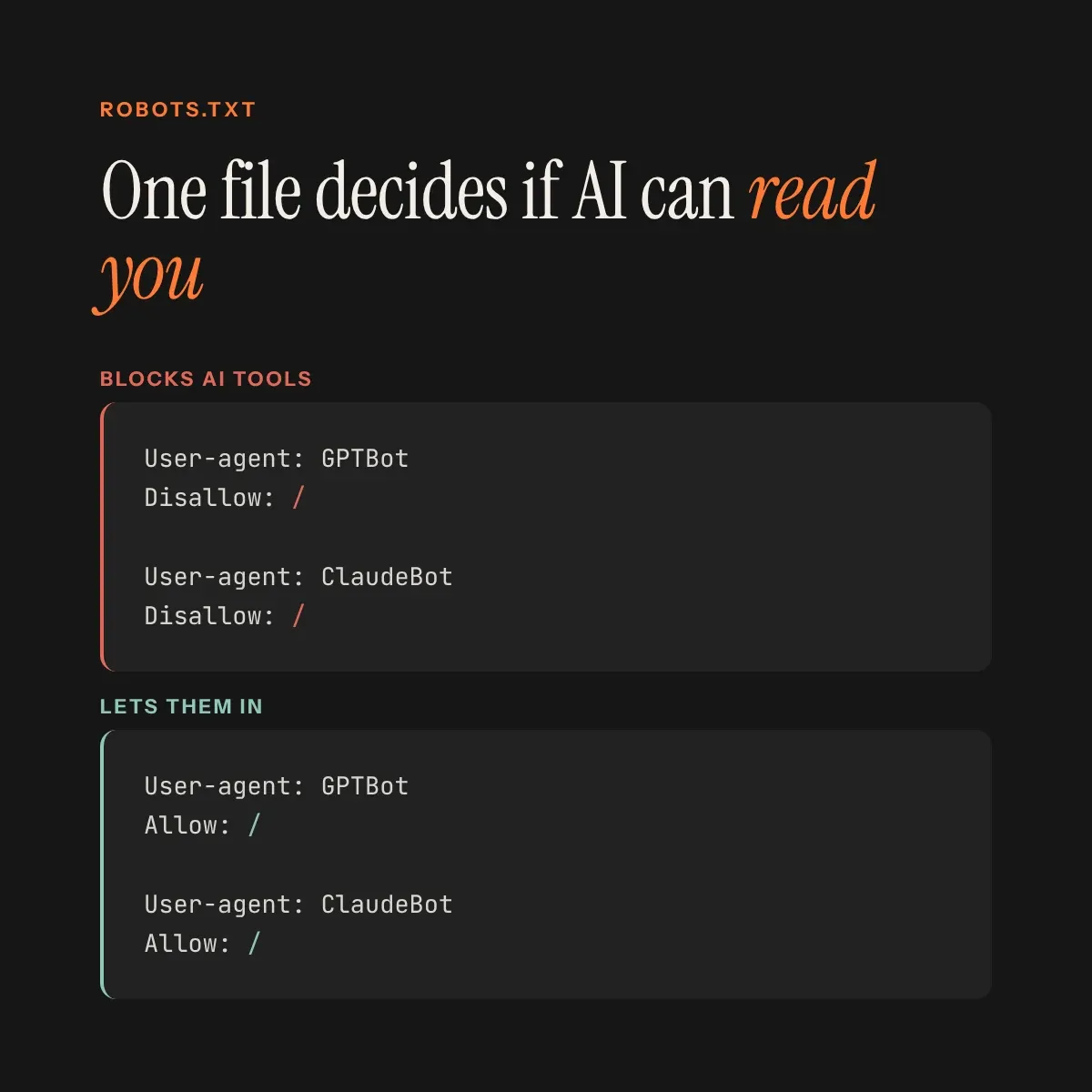
Blocked crawlers. Your robots.txt file can block AI crawlers such as GPTBot, ClaudeBot and PerplexityBot, sometimes by accident. Some hosting and security tools block them by default too.
Content that only appears after JavaScript runs. Many AI crawlers read the raw page and don’t run scripts. A study by Vercel and MERJ found none of the major AI crawlers it tracked ran JavaScript. If your prices, service details or reviews load through JavaScript, those crawlers may see an empty page.
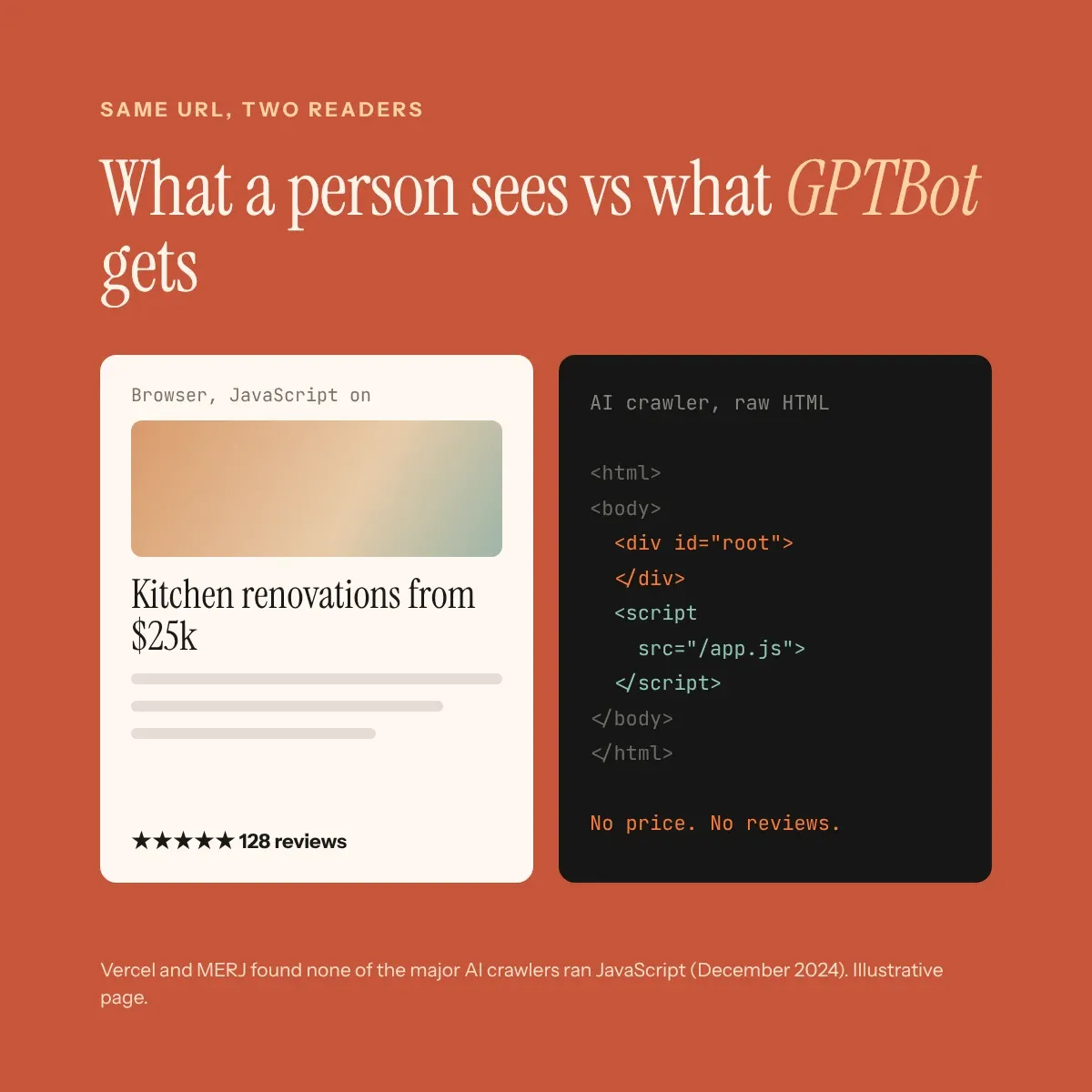
What to do: check your robots.txt and firewall settings, then view your key pages with JavaScript turned off. If the important content disappears, that’s what most AI crawlers see.
The three changes that make a page readable to AI
None of these need a rebuild, and each one helps people too.
1. Write headings as the questions people ask
AI scans headings to find answers. A heading like “Our approach” tells it nothing. “How much does a kitchen renovation cost in Brisbane?” tells it exactly what follows.
What to do: list the questions customers ask your sales team, and use them as headings on the pages that answer them.
2. Put a short answer at the top
Lead with the answer, then tell the story. Two or three plain sentences under each heading give AI something clean to quote. The detail, images and examples below stay for people.
What to do: check your most important pages. If the answer to the main question is buried in the fourth paragraph, move it up.
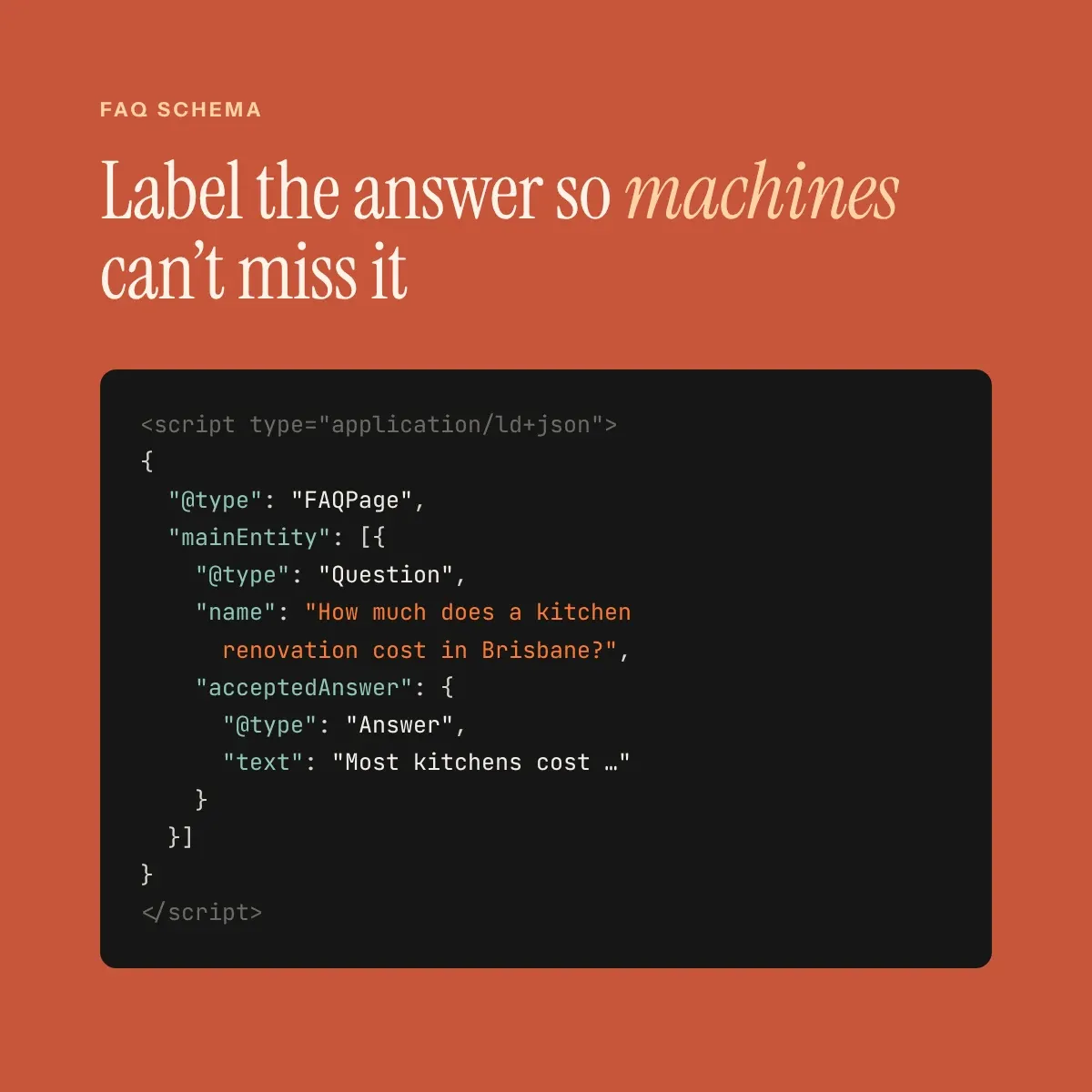
3. Add schema markup
Schema markup is code that labels what each part of a page is: your business, a service, a product, a review, an FAQ. Search engines use it directly, and it gives AI tools a clean, labelled version of your key facts, such as prices, opening hours and reviews. It won’t guarantee a citation, but it takes the guesswork out.
What to do: start with organisation, service, review and FAQ schema on your most important pages.
What AI-readable pages won’t fix
Thin content. Structure helps AI find an answer. It can’t invent one. Pages still need to say something useful.
A weak reputation. If your reviews are thin or your details differ across directories, AI has less reason to trust you. Structure won’t change that.
Guaranteed mentions. Nobody controls what AI tools recommend. Clear, consistent, well-structured pages improve your odds. They don’t guarantee a citation.
How to start
- Pick your ten most important pages. Usually your services, pricing and contact pages.
- Check AI tools can reach them: robots.txt, firewall settings, and whether the content shows without JavaScript.
- Rewrite the headings as the questions customers ask.
- Add a short answer under each heading.
- Add schema markup for your business, services, reviews and FAQs.
- Check your story matches everywhere: your website, Google Business Profile, LinkedIn, directories and review sites.
- Keep reviews coming. AI weighs them heavily.
This is steady work rather than a one-off project. The businesses that keep at it will be the ones AI keeps finding.
What this means for BFJ clients
Our SEO and AEO team works on both halves of the problem: the structure AI reads, and the reviews and mentions it trusts. BFJ Labs tracks AI search visibility alongside Google rankings, so we can see which pages AI is citing and where it’s citing competitors instead.
Here’s what that looks like for our own site. Across the questions we track, AI tools cited bfj.digital between 51 and 63 times a day from 21 to 27 November 2026. The split is uneven. On 27 November, Gemini cited us 24 times and Perplexity 22, while ChatGPT cited us 3 times and Google’s AI Overviews twice.
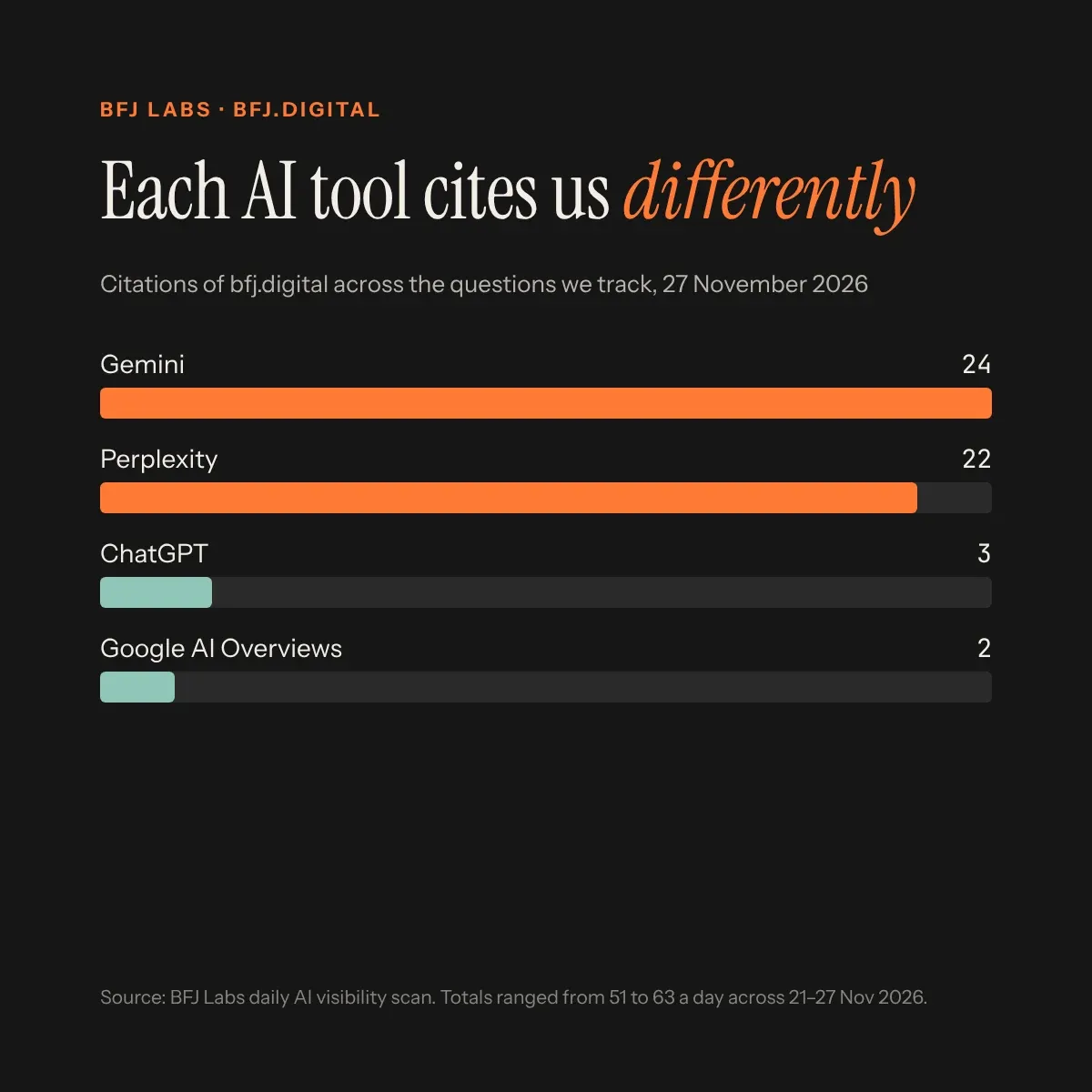
The lesson: being visible in one AI tool doesn’t mean you’re visible in all of them. Each tool picks its sources differently, so track them separately rather than as one number.
FAQ
What is a two-tone website?
One site built for two audiences: designed pages for people, and a clear structure AI agents can read quickly.
Do I need a separate website for AI?
No. The same content serves both audiences. What changes is the structure underneath.
What is schema markup?
Code that labels each part of a page, such as your business, a service, a review or an FAQ, so search engines and AI tools can read it reliably.
How much web traffic comes from bots?
In June 2026 Cloudflare reported that bots made up around 57% of web page requests on its network, overtaking people for the first time. That includes search crawlers, scrapers and malicious bots as well as AI agents, but AI traffic is growing much faster than human traffic.
Why can’t AI tools see some websites?
Usually because the site blocks AI crawlers in robots.txt or a firewall, or because key content only loads through JavaScript, which many AI crawlers don’t run.
See how AI reads your site
Want to know how AI sees your business today, and what to fix first? We’ll check whether AI crawlers can reach your key pages, which of them AI tools cite, and where they cite competitors instead.
Sarah Halliday is a Digital Account Manager at BFJ Digital, bringing ten years of experience across digital marketing, SEO, client management, and project delivery. Based in Brisbane, Sarah specialises in helping clients connect marketing performance to tangible business outcomes through strategic planning and execution.
Her career progression demonstrates her versatility and expertise, having previously served as an SEO Specialist and Account Manager, where she developed strategies that improved visibility, traffic, and conversions for diverse client portfolios. Earlier roles included Digital Marketing Manager, Client Marketing Manager, and Digital Projects Manager, where she coordinated websites, SEO initiatives, and creative deliverables across multiple concurrent projects.
Sarah's dual degree in Business and Creative Industries, with concentrations in Marketing and Art History and Design, provides her with a unique perspective that combines analytical rigour with creative thinking.
Known for her strong work ethic and people-first approach, Sarah excels at bridging technical execution with meaningful client relationships. Her professional interests span SEO, digital strategy, client engagement, and sustainable business growth, making her an invaluable partner for clients seeking both strategic insight and reliable project delivery.
Ready to See the Bigger Picture?
Want to understand how your digital and real-world marketing impact each other?
Not sure if your CRM is supporting your paid media efforts? Just need some clarity and a clear plan to better ROI?
Book your free strategy session today for an in-depth audit and action plan to double your digital marketing ROI.